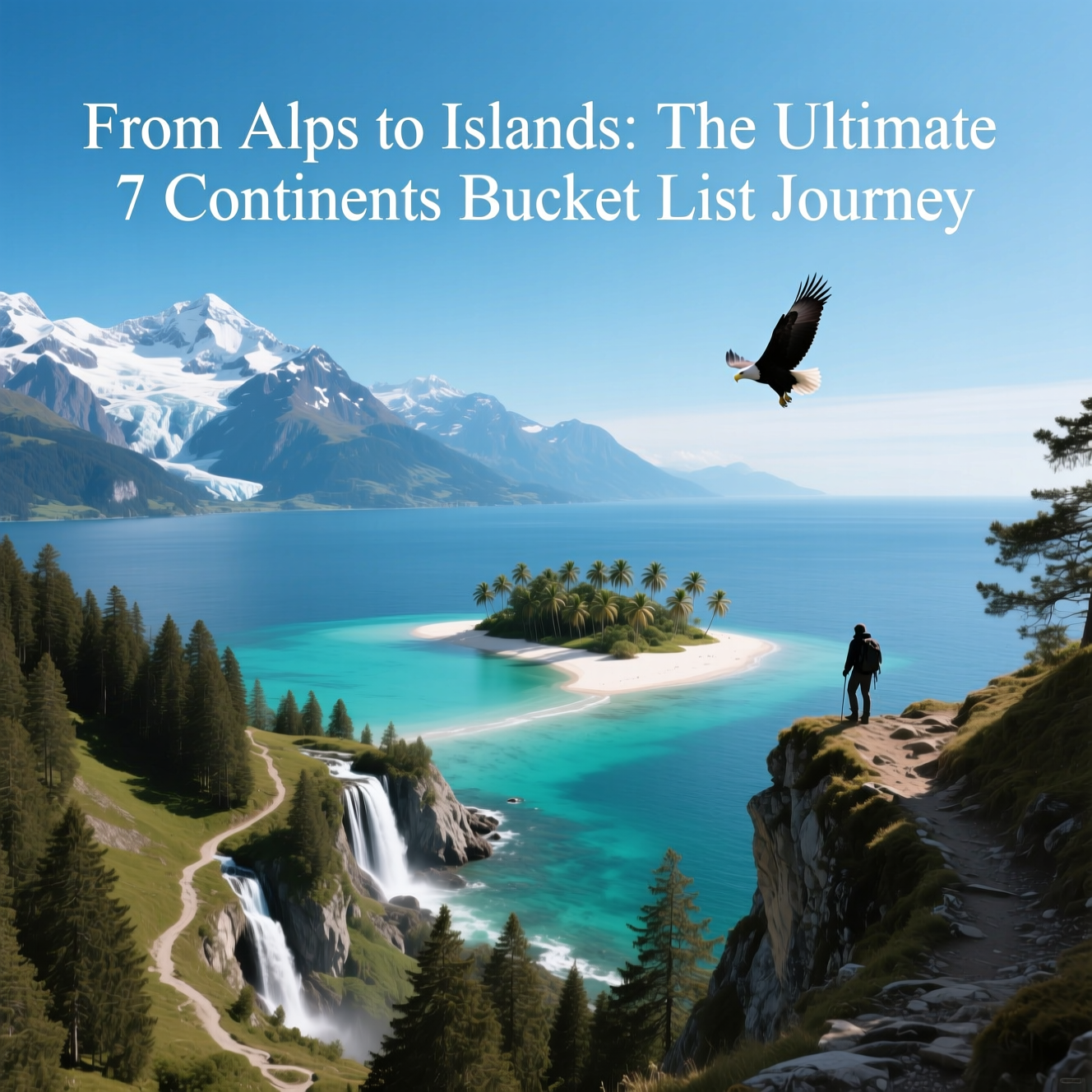
Ready to check the world off your bucket list? This guide takes you continent-by-continent — from the razor-edge ridgelines of the Alps to sun-drenched Pacific atolls — with practical planning tips, timing advice, and the highlight experiences you won’t want to miss. Whether you’re dreaming of glacier hikes, wildlife safaris, or island-hopping, here’s an efficient, inspirational route to craft a once-in-a-lifetime journey across all seven continents.
Europe — Alpine Highs (The Alps and Beyond)
Start with Europe’s Alps: a concentrated playground of hiking, historic villages, and dramatic trains. Key spots: Chamonix (France), Zermatt and the Matterhorn (Switzerland), Dolomites (Italy) and Austria’s high trails. Alpine towns offer easy logistics — cogwheel trains, well-marked trails, and mountain huts (refugios) that make multi-day treks possible without heavy camping gear.
Best time: late June–September for most high-route hiking; spring for lower-elevation wildflowers and fewer crowds. Must-do experiences: sunrise at a high alpine hut, glacier viewpoints, and a scenic rail route such as the Glacier Express.
Antarctica — The Polar Frontier
Antarctica is not just a destination — it’s a mission. Most travelers reach the continent via expedition ships from Ushuaia, Argentina. Choose an operator with IAATO membership and small-ship itineraries to minimize environmental impact. Highlights include zodiac landings among penguin rookeries, sea-ice landscapes, whale sightings, and midnight sun photography.
Note: Antarctic travel requires advance booking, vaccination/medical checks in some cases, and flexible timing due to weather. Plan at least 6–12 months ahead.
Africa — Savannas, Coasts and Cultural Classics
Africa’s bucket-list staples deliver raw wildlife and vast landscapes: Serengeti migration (Tanzania), Okavango Delta (Botswana), and Maasai Mara (Kenya). For dramatic geology, combine Ethiopia’s highlands and the Atlas Mountains in Morocco. Coastal highlights include Mozambique’s Bazaruto Archipelago and Madagascar’s unique biodiversity.
Best time: dry season (June–October) for safari visibility; shoulder seasons can be less expensive and still rewarding.
Asia — Temples, Peaks & Ancient Routes
Asia’s diversity is staggering. Climb to Annapurna viewpoints in Nepal, wander the historic tea terraces in Japan, explore Siem Reap’s Angkor temples, and lose yourself in a bustling metropolitan culinary scene in Bangkok or Tokyo. For alpine adventure, trek in the Himalayas or explore Pamir Highway’s harsh beauty.

Oceania — Island Paradises & Coral Worlds
From Australia’s rugged coasts to tiny Pacific atolls, Oceania is all about water and sun. Key experiences: snorkel the Great Barrier Reef (Australia), island-hop in Fiji or Tonga, and savor Maori culture in New Zealand. For remote, low-key islands, consider Tonga or the Cook Islands for authentic local life and pristine beaches.
Tip: island travel often works best on a relaxed schedule — sea conditions and local transport dictate flexibility.
South America — Jungles, Andes & Ancient Cities
South America combines Amazonian wilds, Andean summits, and colonial cities. Highlights include Machu Picchu (Peru), Torres del Paine (Chile), and the Amazon basin for biodiversity. For culture and flavors, explore Buenos Aires’ neighborhoods, Colombia’s coffee region, and Bolivia’s salt flats for surreal landscapes.
Best time: depends on region — dry season in the southern cone (May–September) and shoulder months for the Andes.
North America — Big Skies to Coastal Charms
North America packs variety: national parks (Yellowstone, Banff), vibrant cities (New York, Mexico City), and coastal drives (Pacific Coast Highway). Blend outdoor adventure with cultural stops — hiking, kayaking, and farm-to-table dining are all region staples.
Practical route idea: start in eastern cities, circle through iconic parks, then finish with a coastal or cultural stretch depending on time.
Planning, Budgeting & Practical Tips
A 7 continents bucket list journey itinerary needs structure: choose a starting hub and cluster nearby continents to minimize backtracking. Example clusters: Europe→Africa, South America→Antarctica (from Ushuaia), Asia→Oceania. Use open-jaw flights, multi-city tickets, and consider round-the-world (RTW) passes for frequent flyers.
Packing & Gear
- Layering system: base, insulating, and waterproof shells for alpine and polar conditions.
- Travel insurance that covers medical evacuation and adventure activities.
- Lightweight but durable luggage; daypack with rain cover and quick-dry clothing.
Health & Safety
Visit a travel clinic 8–12 weeks ahead for vaccinations, and carry a digital and paper copy of prescriptions. For remote areas, learn basic first-aid and know the nearest medical facilities.
Sustainable Travel Tips
- Choose small-group and locally run operators.
- Offset carbon, but also reduce flight legs where possible.
- Respect cultural norms and protected-area rules.
Quick FAQs
- How do I choose which places to prioritize?
- Decide by travel style (adventure, relaxation, culture), season, and accessibility. Prioritize unique experiences per continent — e.g., polar wildlife in Antarctica, alpine summits in Europe, and reef ecosystems in Oceania.
- Can I do this on a budget?
- Yes — but Antarctica and remote islands are costly. Save by using budget-friendly regions (parts of Southeast Asia, Central America), cooking some meals, and traveling off-peak.
FAQ — Quick Answers
How long does it take?3–6 months for highlights; 9–12+ months for immersive travel across regions.
Is this safe for solo travelers?
Yes, with proper planning, up-to-date travel advisories, and sensible precautions. Use local guides for remote or wildlife-heavy regions.